Tap Water Truth Bomb
If you’ve got indoor plumbing in a city, congrats—you’re sipping the municipal cocktail. It’s convenient, dependable, and usually doesn’t smell like a science experiment. But city water isn’t just H₂O—it’s a blend of treatments, chemicals, and aging infrastructure that most people never think twice about.
Until your faucet starts spitting rust. Or your toilet flapper dies (again). Or your skin feels like parchment paper after every shower.
That’s where this blog comes in. We’re breaking down what municipal water really is, what’s riding along in your pipes, and how to keep your home and health safe—without spiraling into tinfoil-hat territory.
What Is Municipal Water, Anyway?
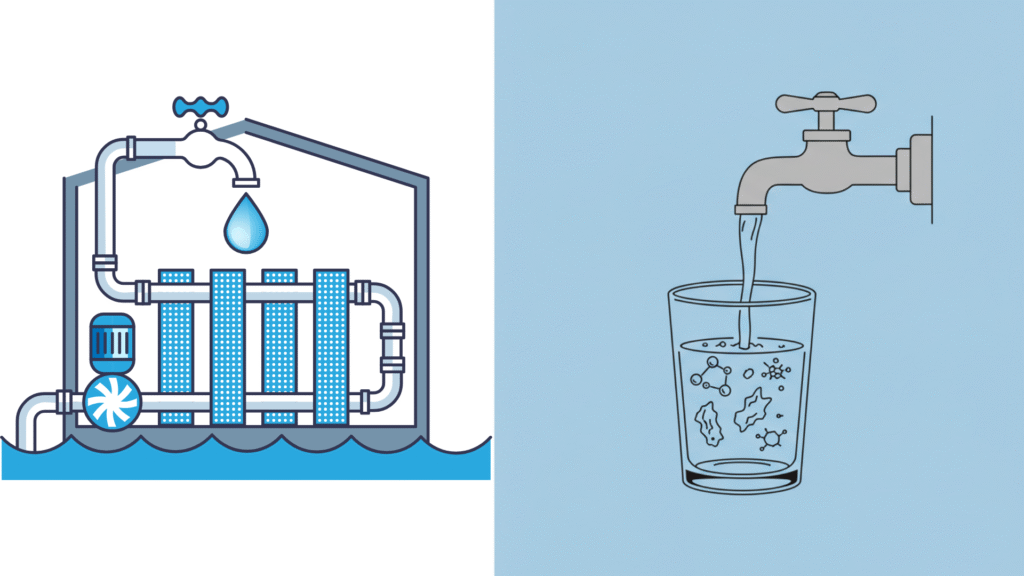
Municipal water is the stuff that flows from your tap when you live in a town or city. It usually comes from big surface sources (like lakes or rivers) or groundwater (from deep city-owned wells). Before it hits your sink, it takes a detour through a water treatment facility.
Here’s what typically happens there:
• Filtration – Think of this as a first swipe to remove dirt, sand, and whatever washed in upstream.
• Chlorination – Kills bacteria, viruses, and basically anything living that shouldn’t be in your cup.
• Chemical Additives – This is where things like phosphates (for corrosion control), fluoride (for your teeth), and pH balancers join the party.
In short: It’s cleaned, chemically adjusted, and shipped out to serve millions of households. But “clean” doesn’t always mean “clean enough for you.”
What’s Really in It? (And Do You Want It There?)
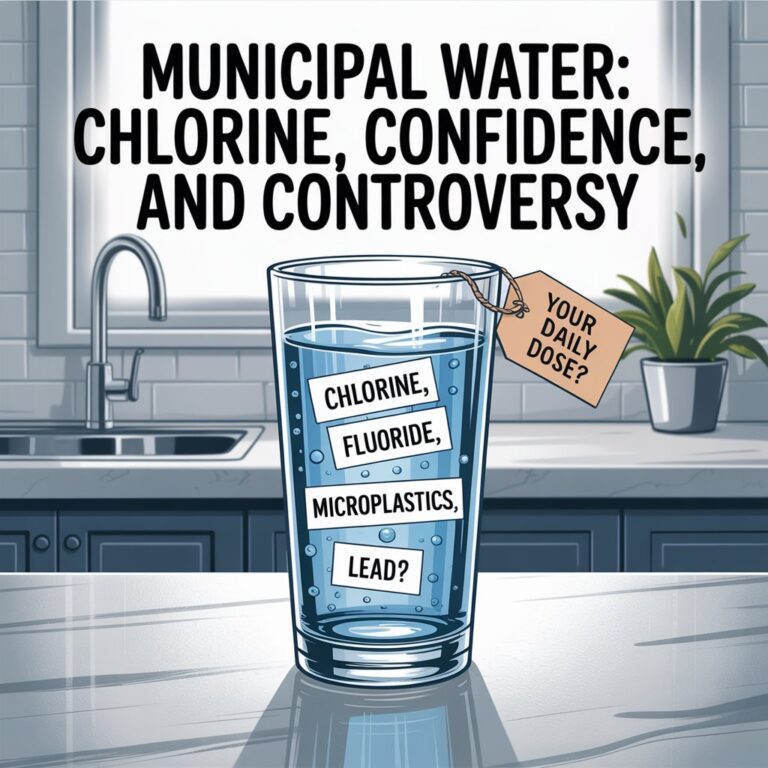
City water may look clear, but it comes with a few extra ingredients that didn’t make it onto the label.
• Chlorine – Keeps germs out, but makes every shower smell like summer camp. Great for pools, meh for pores.
• Fluoride – Some call it a dental hero. Others say it’s a dubious dose. Either way, it’s in there.
• Lead – Nobody’s adding it on purpose, but if your pipes date back to Elvis, it might be hitching a ride.
Trihalomethanes & Haloacetic Acids – Fancy names for chlorine byproducts. Too much = not awesome for long-term health.
Bonus Round: Microplastics, pharmaceuticals, and pesticide residue. Not officially invited, but science says they sometimes sneak past security.
Is Municipal Water Actually Safe?
Short answer? Legally, yes.
But “legal” and “ideal” don’t always hold hands.
Municipal water has to meet EPA standards, which are designed to keep things generally safe for the average person. That’s like saying fast food is “safe” because no one immediately dies from eating it.
But if you:
• Have young kids
• Deal with skin or chemical sensitivities
• Live in a house with 50+ year-old plumbing
…you might want to raise the bar a bit higher than federal minimums.
Think of municipal water as “safe enough to pass,” not “the best your body and plumbing could hope for.”
How City Water Wrecks Plumbing (Slowly but Surely)
Your pipes may not talk, but if they could, they’d probably scream.
-
• Chlorine = Gasket Killer
Over time, chlorine chews through rubber seals and gaskets like termites through drywall. Constantly replacing toilet flappers or faucet washers? Blame the bleachy stuff. -
• Hardness = Crusty Fixtures
If your showerhead’s looking like it’s been frosted with mineral sprinkles, that’s calcium and magnesium having a party—and overstaying their welcome. -
• Sediment = Water Heater Sludge Party
If your water heater sounds like it’s popping popcorn, it’s probably full of sediment. Fun for nobody. Unless you’re a plumber… with a service call.
Things Your Plumber Notices Before You Do:
• Disintegrating seals
• White crusty rings on fixtures
• Cloudy water or low pressure
• A water heater with trust issues
What Doulos Recommends (a.k.a. How to Fix It)
Don’t stress—this isn’t about living off-grid or bathing in bottled spring water. A few smart moves go a long way:
-
• Whole-House Filters = Full-Spectrum Defense
Stops the gunk before it enters your pipes. Great for skin, appliances, and your inner germaphobe. -
• Under-Sink RO or Carbon Filters = Drinkable, Not Regrettable
Filters out chlorine, fluoride, and the bonus cocktail. Your coffee will taste better, your plants will stop judging you. -
• Annual Water Heater Flushes = Don’t Skip This One
Sediment buildup can ruin your heater (and your morning showers). Flush it yearly, or it might erupt like a cranky geyser. -
• Pipe Upgrade Checklist:
If your pipes are galvanized, lead, or older than disco, it’s time for an upgrade. Future you (and your water quality) will thank you.
Trust Your Tap, But Filter It First
City water isn’t the villain—it’s just not always the hero your home deserves. Municipal systems do a solid job delivering treated water, but that “treatment” comes with baggage: chemicals, byproducts, and pipe-age problems that your plumber can spot from a mile away.
This isn’t a panic moment. It’s a prevention moment.
If your water smells like a pool, tastes like a coin, or leaves a crusty trail behind—don’t freak out. Just filter smart, flush regularly, and upgrade when needed.
You can trust your tap…
Just give it a little help first.
Quick FAQ: Municipal Water, Unfiltered
Q: Is municipal water safe to drink?
A: Legally, yes. It meets federal standards. But if you’re sensitive to chemicals or have old pipes, consider filtering it for peace of mind.
Q: Why does my tap water smell like chlorine?
A: Because it’s treated with chlorine to kill bacteria. It’s effective—but it’s also the reason your kitchen sometimes smells like a YMCA pool.
Q: Can municipal water damage my plumbing?
A: Over time, yes. Chlorine wears down rubber seals, and hard water minerals can cause scale buildup in pipes and water heaters.
Q: Do I really need a water filter?
A: If you want to protect your plumbing, improve taste, and reduce exposure to contaminants—yes. Whole-house and under-sink filters are smart options.
Q: How do I know what’s in my water?
A: Check your city’s annual Consumer Confidence Report (CCR). Or just ask your plumber—we see the signs before you read them.
Doulos Plumbing Team
Serving the Magic Valley with expert plumbing services. From water heaters to sewer lines, Doulos Plumbing is here to help Twin Falls and surrounding communities.